Southern Methodist University hosts the public school in Charlottesville, Virginia in an ACC football game. Holland will be in the stands (after Boulevarding, of course!), cheering hard for her school. I will be watching with Dudley, at home, on television. PONY UP!
The Democrats, who think the sky is falling over the high price of oil due to the Iran conflict, could care less about the high price of oil due to the Russian/Ukrainian war. They are denouncing President Trump’s decision to buy diesel fuel from Russia. Which is such horse hockey, given that they would likely celebrate a decision to allow Iran to begin exporting oil again. Or not. Who knows? These people are such cowards and hypocrites. So are many Republicans (Thom Tillis, Mitch McConnell, John Cornyn, Lisa Murkowski, et al.).
But let us set aside the glib sound bites. Let us look at a little factual analysis, to wit:
- Russia uses its vast supply of oil to fuel its weapons of war against Ukraine.
- Ukraine attacks Russia’s oil refineries to reduce Russia’s ability to wage war against Ukraine.
- U.S. buys 300,000 tons of Russian diesel fuel to increase supply and lower prices for U.S. and worldwide diesel consumers.
- Russia has 300,000 tons (significantly more in months to come) less diesel fuel to use in its war on Ukraine.
- Ukraine benefits by Russia’s diminished ability to wage war against it.
- Russia has lots of cash from the deal to buy more oil, weapons, and/or foreign fighting mercenaries.
- OR DOES IT?
- IT DOES NOT!
Sanctions and export controls are having significant and long-lasting consequences on Russia’s defense industrial base. Since February 2022, the United States and its partners and Allies have coordinated to use export controls and sanctions to restrict Russia’s access to advanced technology, which has degraded the Russian weapons industry’s ability to produce and stockpile weapons to replace those that have been destroyed in the war. These sanctions and export controls have remained in effect and have been strengthened in the meantime.
President Trump’s conflict with Iran, and the ongoing military and economic forces applied by his administration on Iran, has not only crippled Iran’s ability to export oil and weapons to militant terrorist groups and to Russia. When these factors are coupled with the existing sanctions and export controls already in place against Russia, and the Treasury’s efforts to paralyze the “sanctions evasion scheme”, Russia is left with a lot of cash from the diesel sale, but few places to spend it.
Now none of this addresses the absurdity of the irrational cry by some to continue to side with Ukraine (ignoring the fact that our assistance to Ukraine erases any complaints we might have to Russia aiding Iran). It is a stupid war for the United States to be involved in, and nothing has been accomplished in 5 years. But, but, but, . . Russia! We have to oppose Russia, or else they will march straight by Paris to The English Channel. Really? Russia cannot get to Kiev.
It is regrettable that Russia chose to invade Ukraine, but hardly surprising. President Obama’s weakness permitted Russia’s 1st invasion, and China Joe’s words actually invited Russia into Ukraine. But this is not America’s fight. Should we want Ukraine to win? Sure. Should we have become involved in this conflict? No. And we should not stay involved.
If President Trump can broker a peace agreement, great. If he cannot, let the 2 countries fight it out. It is not our problem.
____________________________________________________________________
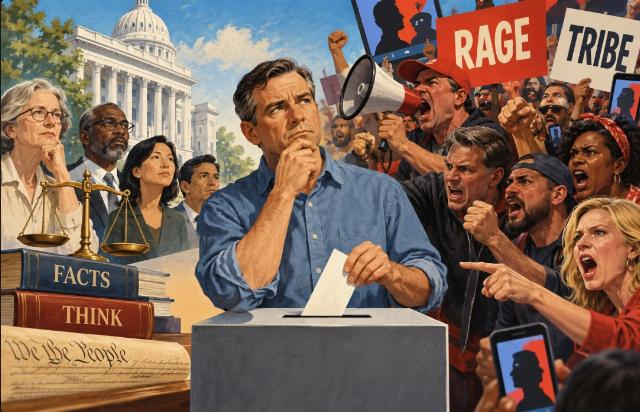
Stupidity: Is It The New Political Power?
How grievance, identity, and performance are reshaping self-government
BY: Allan J. Feifer, The American Thinker (October 8, 2026).
We have spent centuries building societies on the assumption that people can govern themselves. Our institutions are premised on individual responsibility, private property, free expression, voluntary association, markets, constitutional limits, and the belief that adults can generally be trusted to govern themselves.
Yet much of today’s politics appears to be moving in the opposite direction.
Competence increasingly seems negotiable, perhaps even disqualifying. Expertise is often treated with suspicion. Complex problems are compressed into slogans. Identity matters more than accomplishment, authenticity more than knowledge, and how a politician makes people feel more than that politician’s ability.
Why? And more importantly, what happens to our democracy when understanding a political argument matters less than producing the politically correct reaction?
That is a different question from whether conservatives or liberals are right. It is a question about self-government itself. The old populist argument was simple: the elites have failed you, so “power to the people.”
The emerging version may be something stranger: you don’t need knowledge; you only need someone or something to blame.
That’s a very different kind of populism.
Self-government is hard work. It requires citizens to absorb facts, recognize tradeoffs, distinguish evidence from assertion, remember history, tolerate disagreement, and occasionally accept outcomes they don’t like.
None of that is particularly riveting. Anger, outrage, fear, and identity are.
And the modern infosphere is exceptionally good at delivering them.
A politician no longer needs to explain how a complicated policy will work. A social-media influencer doesn’t need expertise in the subject he is discussing. A political movement doesn’t necessarily need to persuade anyone through argument. Identify an enemy, construct a grievance, provide a slogan, and you have an audience that can be controlled emotionally.
Citizens become consumers of political content, and content is rewarded for holding attention, not for its veracity.
This may explain the increasing importance of political performance. People respond to charisma and physical attractiveness. Presentation affects perception. Voters often rely on selective information sources rather than examining issues neutrally.
None of that is new. But technology has rewritten the rules. A candidate can become a celebrity before proving an ability to govern, gaining millions of followers without demonstrating expertise beyond attracting followers. A compelling personality can overwhelm a simple question without addressing—or even understanding—the problem.
At some point, this stops being merely a question of political style.
What if political systems have evolved to reward incompetence?
Not because voters consciously want incompetent leaders. Rather, evaluating competence requires effort, information, and judgment. A politician who answers difficult questions honestly will inevitably disappoint some people. A politician who avoids them can promise almost anything.
That creates a peculiar political incentive:
The less citizens demand intellectually, the easier it is to mislead them.
That’s why this new populism is destabilizing. Traditional populism claimed elites were denying ordinary people their rightful political power. The emerging version turns that proposition on its head. It gives people the sensation of enormous political power while quietly diminishing the power they actually possess.
Citizens get to vote, post, protest, rage, boycott, and demand. But increasingly, political appeals are reduced to choosing your tribe:
Left or right. Us or them. Victim or oppressor. Choose your tribe and never be troubled with thinking again.
Are we witnessing an evolved populism?
Traditional populism mobilized ordinary people against established power. What we’re seeing now increasingly involves mobilizing people through identity, grievance, emotional attachment, and simplistic narratives rather than through arguments about how society actually functions.
Are contemporary political movements organic expressions of what millions of people independently believe? Or are those beliefs being shaped—sometimes deliberately, sometimes accidentally—by social-media algorithms, political organizations, universities, corporations, bureaucracies, advocacy groups, entertainment, foreign influence operations, and an opinion industry devoted to delivering specific outcomes?
No secret room is needed to coordinate the process. Systems don’t require conspirators to produce coordinated effects. Embedded incentives will do the job on their own.
If outrage attracts attention, outrage will be amplified. If grievance mobilizes voters, grievances will be cultivated. If identity produces loyalty, identity becomes the objective. If fear generates clicks, fear will be supplied.
And if citizens consume politics this way, politics accelerates the process. The result is a feedback loop: the public becomes more emotional because politics has become more emotional, while politics becomes more emotional because emotional appeals work.
That brings us to a larger question about the direction in which Western societies are moving.
For centuries, the West developed certain assumptions about the individual. Individuals possessed rights. Property could be privately owned. Government had limits. Markets could operate without central direction, and people were responsible for their choices.
No system is perfect, but those assumptions produced an extraordinary civilization. Today, many of them are being challenged. That’s okay. Every generation should challenge inherited ideas.
But there is a question almost nobody asks loudly enough:
What replaces them?
If individual responsibility declines, what replaces it? If open markets are rejected, who allocates? If private property becomes less secure, who decides what belongs to whom? If institutional authority is weakened, what replaces it? If competence becomes subordinate to identity, how do complex societies keep functioning? And if citizens lose the habit of independent judgment, who’s left to govern?
Perhaps our greatest vulnerability is also our greatest strength. Free people are difficult to control. But they can also be persuaded to surrender their freedoms if you convince them that those freedoms are responsible for their problems.
Individualism can slide into selfishness, while freedom can decay into license. Skepticism can become nihilism, and populism can become tribal. Democracy can weaken the very conditions that make democracy viable.
Collapse is not inevitable, but we should recognize the warning signs.
Failure is unlikely to arrive as tanks in the streets or governments falling overnight. It will be more mundane: institutional competence mattering less; political loyalty mattering more than truth; citizens becoming increasingly unable to agree on basic facts; disagreements becoming moral emergencies; government assuming responsibilities once reserved to individuals; and political leaders being rewarded for promises rather than results.
The most troubling sign may be simpler still:
People become increasingly certain of what they believe while becoming increasingly incapable of explaining why they believe it.
That’s how a civilization becomes stupid—not by losing intelligence, but by losing the habit of using it.
And that may be the most consequential issue facing our civilization.
Not whether the left or right is winning. Not even whether populism is winning.
What if the real winner is a political system that no longer requires citizens to think for themselves?
If that is happening, we should probably figure it out before we discover the answer the hard way.
God Bless America.
____________________________________________________________________
The parasites versus the empiricists: How the political class is taking you for suckers
BY: Matthew Syed, The New York Post (October 8, 2026).
I keep hearing that America is polarized. Republicans vs. Democrats. MAGA vs. DSA. Wokesters vs. anti-wokesters. It’s true, up to a point. But I believe there is a more consequential divide, one growing wider and more perilous every day.
I am talking about the division between the empiricists and the parasites.
The empiricists are most of you reading these words. Entrepreneurs. Blue-collar workers. Engineers. Scientists. Business people.
An engineer has to be in touch with empirical reality because if their assumptions about gravity are inaccurate, their bridges will fall down. An entrepreneur has to be in touch with reality because if he can’t persuade customers to buy his products, the businesses will go belly up.
America is the undisputed world leader in empiricism: more Nobel prizes than any other nation, dominance in the frontier technologies, an army of highly impressive (and hugely industrious) blue-collar workers, a spirit of enterprise that remains the envy of the world.
When you live here, you probably don’t notice what outsiders sense the moment they land. The buzz. The sense of possibility. The American dream is perhaps not what it once was, but it’s still alive. Almost two centuries ago, de Tocqueville wrote “No sooner do you set foot upon the American soil than you are stunned by a kind of tumult . . . Everything is in motion around you.” The words ring as true today as in the 1830s.
This is a nation that once pushed at geographical boundaries but is now pushing at what the philosopher Sir Karl Popper called “the frontiers of knowledge”: quantum, robotics, AI, medicine and the vast array of entertainment products that course through the limbic system of the Republic, even if in the case of social media not always for the better.
Ancient Rome pales by comparison. As do the Abbasids, Persians, Greeks, Phoenicians, Carthaginians and Babylonians.
The American-led global order has incubated more prosperity in the last 80 years than most of the previous 25 centuries combined. America still delivers a quarter of the world’s output with only 4% of the population.
But I’m sorry to say that America also plays host to a growing army of parasites: smaller in number, but ever more draining in effect. They exist in one place above all others: Washington. Some are called Republican and others Democrat, but they are vampiric in virtually the same way and for the same reasons.
Debt looms
An empiricist understands that you cannot borrow the moolah indefinitely without paying a huge price. Parasites of both parties borrow and borrow. And borrow some more. Debt has risen to more than 100% of GDP, a scandal overseen by presidents of all colors, stealing from the future to pay for the present in the way that a realist would never countenance.
Only the dynamism of the private sector is keeping this Ponzi scheme afloat, driving growth just about capable of servicing the ever growing interest burden (now measured at almost $1 trillion).
But for how long? Bond yields are rising, placing an even larger weight on the throats of those paying the bill (not least future generations who didn’t even vote for this profligacy) while Washington gets fatter.
That’s one thing to understand about an ever expanding state: there are more side alleys in the sprawling labyrinth to be gamed by insiders for their own profit. The Pentagon hasn’t passed an audit since they started conducting them in 2018. They can’t even account for the cash or where it’s going.
Top of Form
Bottom of Form
Yet the real scandal extends way beyond the debt and waste. Senators get ever richer from “public service” but few ask why. Congressional staffers become lobbyists for industries whose laws they helped to write — a game played by Democrats and Republicans alike.
Aging corporations protect themselves from competition not through innovation but by erecting barriers to entry with the complicity of the political class.
That is how corruption today drains an economy: not with one spectacular theft, but by the steady diversion of talent and capital away from productive activity and towards political connection. The scale of this extraction is difficult to overstate.
They arrive as a thousand small impediments to enterprise: a permit delayed, a tax loophole preserved, a regulation written by insiders, a subsidy paid to yesterday’s technology. American capitalism is now rigged in favor of incumbents: politicians and regulators coining it while competition is throttled. I find it darkly comical to observe MAGA supporters condemning the “corrupt” Democrats — Crooked Joe, Dodgy Hillary — while the Dems hammer Trump for the same reason: memecoins, allegations of front running and more.
It’s all a game, folks. A distraction. The partisan hysteria whipped up by each high-profile scandal obscures the deeper truth neither side wants you to grasp.
Looting all over
Both sides are looting the coffers in plain sight in ways that are normalized and often legalized.
In his 18th century work on the fall of Rome, the British historian Edward Gibbon talked of “a slow poison introduced into the vitals of the empire.” When I look at Washington today, I see an eerily parallel story unfolding.
Ponder this paradox. In the 20th century, despite two global conflagrations and the Great Depression, economic growth in America averaged almost 3.5%. In this century, despite the internet, Moore’s Law and relative peace, it has slumped to 2%.
Some might say we’ve been here before. Historians talk of the Whiskey Ring, the Keating Five and the 19th century “state of courts and parties.” But none of this touches the scale of corruption today. America continues to produce the world’s finest entrepreneurs, scientists and blue collar workers but they are like a magnificent thoroughbred sweating under the crippling weight of a burden few even mention.
Yet let me finish with this thought: the answer is not to succumb to the fashionable nihilism of tearing everything down.
The grievance-fueled revolution promised by the Marxist left and extremist right would be no remedy.
The DSA sees corruption and concludes that the system itself is the crime: capitalism, the Constitution, the whole inheritance. They have it precisely backwards. What I’ve described is not the American system working as designed. It is a betrayal of that design.
No, what this country needs is not a revolt against its founding principles but their restoration: truly competitive capitalism, government constrained by the Constitution, public servants who serve the public rather than themselves.
End the parasitism and America will fly again.
____________________________________________________________________
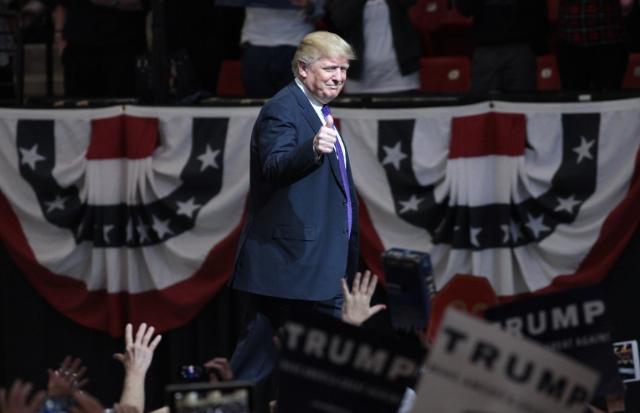
President Trump is reminiscent of the Founding Fathers
Imagine what it must have been like to be a pampered career politician watching Trump come on the scene.
BY: Bob Weir, The American Thinker (October 15, 2026).
Imagine that you were elected to a federal office several years ago and had a safe seat, with all the perks attached, including salary, expense account, and influence with corporate CEOs and other titans of industry. Suppose further that you knew that the future would be prosperous when you left office because the connections you made would make you a fortune as a lobbyist. Moreover, since unseating an incumbent is a herculean task, you felt that you were set for life. In fact, as soon as you got elected, you began raising money and preparing for re-election. Governing and legislating became an afterthought, something you might engage in after your next campaign was carefully planned.
Suddenly, a guy runs for office with a lot of ideas about “draining the swamp” and making rules that include a prohibition on lobbying for at least five years after leaving office. As if that’s not enough, he criticizes the “establishment,” of which you are a significant part. To add insult to injury, this upstart comes from the private sector with no record of elective office, yet he has the audacity to run for the highest office in the land. You, and most of your colleagues, got where you are by starting in local elections, from city councils to mayor to state rep, and on to your current spots at the national level.
You didn’t take him seriously throughout his long and vociferous campaign, often refusing to endorse what he said and what he stood for. When he shocked the world with a strong win against a candidate the polls said would win easily, all you could do was feign approval and acceptance. You didn’t dare speak publicly about your disdain for the man who was elected to actually make America great again!
Not only did this newcomer speak bluntly, eschewing politically correct tap-dancing around issues, but he spoke forcefully about the venal nature of politics and those who use it for personal aggrandizement. He didn’t use lofty rhetoric and eloquent phrases like those professional politicians who engage in speechifying to impress an audience. Instead, he spoke in a language rarely heard in a country weaned on Pied Piper–style oratory. He merely told the truth in plain words that would resonate with the proletariat, the people who made this country the envy of the world. The voters were thrilled to finally have a leader who uses common sense rather than a wet finger in the air before making decisions.
However, those who have been entrenched in their private little fiefdoms in the nation’s capital began to wonder how they were going to deal with this brilliant maverick who had captured the imagination of millions of Americans who had just about given up on government.
Democrats hate him with a ferocious intensity that comes from seeing their plans for party dominance collapse under the weight of this new spirit of patriotism. Republicans hate him for beating all their veteran politicians and for proving how ineffective they’ve been at improving the lives of their constituents. After all, if neither party can win by using the customary bromides, spewing from the mouths of the usual suspects, they must have lost touch with the people who once lapped up their verbal vacuity, believing that it was the only pablum on the shelf. When Trump first ran in 2016, the old political hacks were asking why would voters reject prominent names like Jeb Bush, Lindsey Graham, John Kasich, et al., political veterans all, in favor of a neophyte.
Those questions continue to haunt the inhabitants of that sewer on the Potomac. They don’t appreciate being forced out of the darkness, where greedy deals are made and concern for the people gets thrown under the grinding wheels of political expediency. These are not exactly profiles in courage. With rare exceptions, these are people who arrived at the “shining city upon a hill” with the intention of making a career, and if that meant going along to get along, it was fine with them. They weren’t about to step out of their comfort zones by addressing controversial topics that might make them unpopular during the next plebiscite.
Hence, when an intrepid leader emerges and abandons caution in favor of keeping his campaign promises, he’s treated like an anomaly. The fact that he’s fighting for the principles voters elected him to fight for is lost on those who got elected with one thought in mind: to feather their own nests. They’ve tried everything to stop him, including a few assassination attempts and some of the most spurious criminal charges in the history of jurisprudence. He has not only survived them all, but has raised his fist in defiance of a system that has shown contempt and insane hostility toward anyone willing to expose it.
President Trump is reminiscent of the Founding Fathers, the type of statesmen who triumph against incredible odds to build the greatest country in the world. Now, after many years of being led by men like Clinton, Obama, and Biden, all of whom apologized for our country, we have a leader working indefatigably to take our country away from the crooked oligarchs and give it back to the people.
GFK

