“Lord, make me an instrument of thy peace.
Where there is hatred, let me sow love,
Where there is injury, pardon;
Where there is doubt, faith;
Where there is despair, hope;
Where there is darkness, light;
And where there is sadness, joy.
O Divine Master,
Grant that I may not so much seek
To be consoled as to console,
To be understood as to understand,
To be loved, as to love.”
–St. Francis Of Assisi.
Today I find myself back in Northern Virginia for the first time in about 2 weeks. I missed English, Dudley, and my house. I missed my tiny little community in Northern Clarke County. But I cannot say that I missed Northern Virginia. Because once you wander even a little bit out of Berryville, all of that which makes Washington, D.C. comes crashing down upon you.
Today I am sharing some commentary on the State of the Union, socialism, and things that Americans used to know, but nowadays, . . not so much. Enjoy!
____________________________________________________________________
At 250, America faces the signs of civilizational decline
Debt, dependency and decadence now threaten the nation from within
BY: Don Feder, The Washington Times (September 6, 2026).
Americans are justly proud as we celebrate our 250th birthday.
Yet what is this milestone compared with history’s great civilizations? The Egyptian empire lasted for three millennia. In the east and west, the Roman empire endured for 1,500 years. The Portuguese and Ottoman empires enjoyed their moment in the sun for 584 and 623 years, respectively.
Some historians believe civilizations go through predictable stages. First, there is the Age of Pioneers (explorers and settlers), followed by an Age of Commerce and Affluence, which leads to an Age of Prosperity, then to an Age of Entitlement and finally to an Age of Cynicism and Decadence.
In the final stage, religious observance declines precipitously, marriage is rare, people stop having enough children to maintain the population, debt soars and intellectuals are devoted to attacking the civilization that spawned them.
Historian Will Durant, in his monumental “The Story of Civilization,” warned, “A great civilization is not conquered from without, until it has destroyed itself from within.” We are working on it.
Historian and British army officer John Bagot Glubb observed: “The life expectation of a great civilization, it appears, commences with a violent and usually unforeseen outburst of energy and ends in a lowering of moral standards, cynicism, pessimism and frivolity.”
All the signs indicate that our civilization is terminal.
The homeless population of the United States is more than three-quarters of a million. Most are too addicted to do much more than lie about in a stupor. They clutter the streets with used needles and feces and start fires.
From January to mid-December 2025, the Los Angeles Fire Department responded to 16,982 fires at or near homeless encampments.
Because of misplaced compassion, we lavish resources on this human contagion and then berate ourselves for not doing more for them.
The same suicidal empathy led to open borders under President Autopen with as many as 20 million entering the country illegally — just the sorts of people you want to destroy a culture. We traded the safety of our citizens for political advantage for the ruling party.
The national debt is now $40 trillion, almost half of it accumulated in the past seven years. In 2001, the national debt was 31.5% of gross domestic product. Today, it is 124% of GDP and climbing. When it comes crashing down, we could be buried in the rubble.
Interest on the debt is now the second-largest item in the federal budget, behind only Social Security. We spend more to service the debt than on national defense. Most of the debt is a result of welfare spending. Today, 53% of Americans derive at least a quarter of their income from government assistance programs.
The Roman empire had a massive welfare state too. During the reign of Emperor Claudius, it is estimated that 1 in 3 Romans was on the dole.
The decline of religion is yet another indication of a civilization teetering on the brink.
According to Gallup, the percentage of U.S. adults who say religion plays an important part in their daily lives fell 17 points — from 66% to 49% — from 2015 to 2025.
Durant observed: “Even the skeptical historian develops a humble respect for religion, since he sees it functioning, and seemingly indispensable, in every land and age. … The soul of a civilization is its religion, and it dies with its faith.”
Adding to our woes, we have our own Huns and Visigoths prowling on the perimeters. The Democratic Socialists of America would destroy everything that makes our nation unique.
The DSA is for abolishing borders, making the president and Supreme Court subordinate to Congress and eliminating police and prisons. That Fidel Castro is its hero should come as no surprise. Instead of incarcerating criminals, it would lock up dissidents.
We have abandoned reality for fantasy (that a man can become a woman) and truth for blind adherence to dogma (that the rich are a drag on society). We revile the pioneers who settled this country. For many, the 9/11 attacks are seen as a punishment for our sins.
Never have a nation’s opinion leaders been more fiercely devoted to its annihilation.
Our civilization is akin to one of those airplane disaster movies where someone says, “We’ve passed the point of no return,” just before one of the engines conks out, the fuel gauge is on empty and the pilot starts shouting, “Allahu Akbar.”
Will someone please notify the control tower?
____________________________________________________________________
The Affordability Crisis Can Be Blamed on One Thing and One Thing Only — Government Intervention
BY: Kyle Becker.
So, the Democrat Party has finally discovered the Affordability Crisis.
Just in time for the 2026 midterm elections, as fate would have it.
But the Democrats’ penchant for blowing trillions of dollars on waste, fraud, and abuse got us to this point. And their solution for the big government intervention that caused the problem?
More government intervention. This is the definition of madness, and it doesn’t take Albert Einstein to see where this is all heading.
Bernie Sanders is at the forefront of this socialist bait-and-switch. He recently proposed that Americans can “solve” the high cost of healthcare if they turn over all control of it to the government.
“An Uber driver shared with a staff member of mine how after Trump’s healthcare cuts, his monthly premiums increased 400%,” he claimed. “His copay went from $1 to up to $90 for each of his medicines. It’s not just this Uber driver. It’s happening all over America. We need Medicare for All.”
. . . Whenever the government intervenes in a sector of the economy, the price of everything skyrockets.
That’s not your imagination. It’s a real phenomenon. And it is why you can make a powerful argument that so much of what is becoming more expensive in America can be traced to a handful of toxic institutions that have been wreaking havoc throughout the so-called “progressive era.”
Look at what has happened to prices over the last quarter-century. From 2000 through 2025, hospital services rose about 281 percent. College tuition and fees increased 197 percent. Childcare climbed 159 percent. Medical-care services increased 147 percent. Housing rose 111 percent.
Meanwhile, televisions fell roughly 98 percent. Toys fell 74 percent. Computer software dropped 73 percent. Cellphone service declined 44 percent.
What distinguishes these groups? It certainly isn’t capitalism. They’re all part of a capitalist economy. The difference is that many of the things becoming brutally expensive are concentrated in sectors that government has spent decades trying to make “affordable.”
Compare that with American healthcare, higher education, and housing. Those sectors are swimming in subsidies, federally backed financing, regulations, mandates, licensing requirements, and restrictions on supply. Government and insurance companies stand between patients and medical providers, while Washington has spent decades flooding higher education with federally backed student loans.
The federal government subsidizes mortgages even as state and local governments often make it extraordinarily difficult to build more homes. And we’re surprised prices went up?
Let’s take a look at what the Democrat Party disingenuously deems “Medicare for All.”
It’s like a doctor prescribing a poisoned patient more of the poison that got him sick in the first place.
Never mind that Obamacare was supposed to fix this problem. That has already been memory-holed, because every thinking adult knows it was sold on false promises.
The entire point was to get to Single-Payer, aka taxpayer-financed, socialist medicine.
You might recall that viral clip of Rep. Jan Schakowsky (D-IL) speaking to a Chicago healthcare rally in 2009. She boasted that a public option “will put the private insurance industry out of business and lead to single-payer.”
Barack Obama himself wasn’t bashful about his true objective: “I happen to be a proponent of a single-payer universal health care program… A single-payer health care plan, a universal health care plan. And that’s what I’d like to see. But as all of you know, we may not get there immediately.”
But perhaps the pithiest synopsis came from former Sen. Barney Frank (D-MA), who said, “If we get a good public option, it could lead to single payer, and that’s the best way to reach single payer.”
Thus, we would be fools to believe that the Democrat Party actually wants the healthcare market to succeed through lowering costs and offering patients choice.
The socialist Democrats’ damage to the market isn’t limited to the healthcare sector, however.
This is where Austrian economics provides a useful explanation. Economists such as Ludwig von Mises and Friedrich Hayek understood that prices are information. They communicate scarcity, demand, and production costs across millions of people who could never coordinate their decisions directly.
Hayek’s famous critique of the “pretense of knowledge” was aimed at the conceit that central planners can possess enough information to rationally manage something as complicated as an economy. A bureaucrat may have statistics and models, but he cannot possess the constantly changing knowledge distributed among hundreds of millions of consumers, workers and businesses.
Government nevertheless keeps pretending that it does. Washington subsidizes demand, guarantees loans, restricts supply, regulates prices and mandates benefits. The Federal Reserve manipulates perhaps the most important price in the economy: the price of money itself.
People then respond rationally to distorted information. This can produce what Austrian economists describe as a cluster of errors. Individual mistakes occur constantly in markets. But when government or a central bank systematically distorts a signal used across an entire economy, millions of people can make similar mistakes simultaneously because they’re responding to the same artificial incentives.
Housing is an obvious example. Make mortgages artificially cheap, subsidize borrowing, and pump credit into the economy while local governments restrict construction through zoning and permitting. More money chases a constrained number of houses, and prices rise. Washington then declares a housing affordability crisis and proposes building more Section 8 housing.
Over time, the entire economy gets dragged down, and urban areas start to resemble Soviet-era Eastern Europe.
Higher education is another example. Washington wanted to make college affordable, so it expanded grants and federally supported student lending. Universities discovered that their customers could borrow increasingly large amounts of government-backed money, and tuition marched upward.
The deeper historical problem goes back more than a century. Woodrow Wilson’s era gave America both the Federal Reserve and the modern federal income tax. Those institutions supplied the monetary and fiscal machinery that allowed the federal government to grow far beyond anything previous generations had experienced.
The dollar has since lost roughly 97 percent of its purchasing power. Americans have become so accustomed to permanent inflation that the Federal Reserve describes prices rising approximately 2 percent every year as “price stability.”
This monetary degradation sits beneath the entire affordability debate. Americans earn, save, and retire on dollars whose purchasing power continually declines, while artificially cheap credit can inflate assets such as housing.
The New Deal and Great Society then accelerated the growth of the administrative state, creating another problem: Bureaucracies have their own incentives.
A private business that continually fails its customers can disappear. A government agency that fails can use the persistence of the problem as an argument for a larger budget. If homelessness gets worse, the homelessness bureaucracy needs more funding. If education deteriorates, education agencies need more resources. If health-care costs increase, government health programs need to expand.
There is a perverse incentive built into this arrangement: Actually solving a problem can weaken the institutional justification for the people being paid to solve it. Over time, government programs also develop their own constituencies — bureaucrats, contractors, advocacy groups and beneficiaries — with a vested interest in keeping the machinery running.
That is the vicious cycle now sitting at the center of the Democrat Party’s affordability agenda. Eventually, nobody remembers what the market looked like before Washington began “fixing” it.
This is why the Democratic response to the affordability crisis is so fundamentally wrong. They are presenting government intervention as the antidote to a problem that has become most severe in some of the most heavily manipulated sectors of the economy.
When government intervention produces a disaster, the answer is invariably another intervention designed to fix the consequences of the first one. And when that intervention produces another set of distortions, Washington discovers yet another crisis requiring another government solution.
That isn’t a way out of the affordability crisis. It is the mechanism by which the cycle perpetuates itself.
Washington has been trying to “help” make Americans’ lives more affordable for generations.
Judging by the bill, it might be time to ask Washington to “stop helping.”
____________________________________________________________________
‘It Can’t Happen Here’? Are You Sure?
Why do young people love communism so much nowadays?
BY: John F. Gaski, The American Thinker (August 27, 2026).
Much of the American commentariat remains somewhat mystified at the number of young countrymen who can be so dissatisfied with their personal economic circumstances that they turn to discredited socialism. Lately, understanding of this phenomenon is making some inroads, but there remains a need to pull the diverse causal pieces together into a coherent gestalt.
First, is it not exasperating to hear the disaffected masses claim that the U.S. economy is not working, at least not for them? Such narcissism by the “entitlement” culture! The appropriate rhetorical rebuttal question to that posture is, then why is it working just fine for so many others?
In fact, the U.S. economy is presently very strong, per the standard metrics. We are at full employment, formally defined as about 4 percent unemployed. Macroeconomic growth is enduring and stable. Taxes are lower, especially for those dependent on tips, overtime, or Social Security. Real incomes, which declined under Biden, are rising (as they also did in Trump’s first term).
The main negative for the consumer is that inflation is still too high, but it is truly amusing to hear Democrats and their socialist fellow travelers complain about “affordability.” Most of the abnormal surge in consumer prices in recent years is attributable to the 22-percent cumulative increase during the Biden years. Imagine how much lower retail prices would be if we could subtract out that 22 percent and the 49-percent rise that occurred during Jimmy Carter’s term! (Inflation has actually been relatively tame during Trump’s 5.5 years in office, as it was under Obama, Clinton, and G.W. Bush. As Casey Stengel once said, “you can look it up.”)
So, a fair conclusion from the preceding is that the economic losers may largely have themselves to blame. The problem is not the overall U.S. economy. Data recently publicized by pollster Nate Silver reveals the diagnosis that those losers are mostly dim-witted liberal Democrat-socialists who chose college majors with little market value, leading to their own low incomes.
To further reinforce where fault lies, demographic statistics confirm how remarkably easy it is to avoid poverty in this country. You need to do only three things — finish high school (even a bad one), avoid having a criminal record, and avoid becoming addicted to drugs or alcohol — and your chances of living in poverty in the U.S. are close to zero. (There are other sets of three sufficient conditions, including factors such as “come from a two-parent household.”) Apparently, many American youths cannot surmount the low hurdles. Corollary blame in this regard, nevertheless, lies with the liberal Democrats who (1) destroyed the quality of American public schools, (2) have been soft on crime, and (3) have glorified substance abuse. Coincidence?
The role of liberal Democrat ideology and policy in creating an economically illiterate cohort should not be overlooked. Reflect again on the terrible public schools tolerated in the blue cities and states, co-mismanaged by the leftist-politicized teachers’ unions. The propagandized content of leftist ideology has also surely contributed to the proliferation of decrepit college majors such as gender studies, fine arts, and even sociology that hamstring their grads in the job market.
Moreover, as well as the U.S. economy is performing now, it could be operating even closer to the optimum if not for misguided and incompetent macroeconomic interference by the left-liberal-Dem-socialist camp whenever they have held dominant power, which has produced over-regulation; excessive inflation; and massive federal debt, inducing high interest rates. (Readers will be aware that Republicans and conservatives are not economically pure, only less guilty based on the objective record. Do not believe the misleading claim that U.S. economic growth is stronger when Democrats are in the White House. See Gaski, City Journal, May 30, 2016.) Again, the present difficult straits of some of our citizens are not the fault of American capitalism. They are instead the result of individuals themselves combined with the left’s sabotage.
The extant state is almost as if it has gone according to plan. A deconstruction of the American left’s playbook, circa 1970 at the beginning of its subversion campaign:
First, take over the universities for indoctrination and, in turn, to undermine our disciples’ economic prospects. Then we infiltrate elementary and high schools to lower academic standards and dumb down the populace more generally, to its economic detriment. At the same time, we dispense relentless radical propaganda to brainwash America’s youth. Still, we need to dumb them down enough to render them pliable to the message — and we do need widespread economic failure to make the victims amenable to persuasion by a failed system such as socialism. In short, we ruin people’s economic lives and reinforce the effect through false propaganda to keep them on track for failure. Dumb them down enough, and they won’t even recognize that socialism is communism because the latter is socialism’s ultimate aim. Onward the revolution!
(Even leaders of the Democratic Socialists of America have been publicly exposed for ignorance of what socialism is!)
An implausible conspiracy theory? Actually, Cloward, Piven, and Alinsky had already said this quiet part out loud contemporaneously, and a concrete manifestation is readily identifiable: By destroying the quality of inner-city schools (all run by liberal Democrats) in particular, along with glorifying the crime and drug culture while incentivizing single-parent households, the American leftist–Dem-socialist side has undermined black opportunity enough to create a permanently frustrated and Democrat-loyal underclass. The cause-and-effect relation is so transparent that it could hardly have been unintentional!
Now they transfer the sinister methodology to the broader population. The lib-Dem left undercuts economic advancement for a large subset of the U.S. population while subjecting them to socialist propaganda, which is absorbed only because the left had first handicapped the audience cognitively. This answers the prevailing question of how so many Americans can succumb to the phony lure of the failed ideology of socialism. Simply, they were manipulated into that dead-end position by the Dems’ multi-pronged attack. Yes, the immediate cause is indeed abject ignorance by a segment of the public, but the ignorant have received a devious negative assist through the crippling influence of leftist ideology at the micro and macro levels. The left’s program: Wreck their schools, brainwash them, and subvert their economic environment; then we’ve got them where we want them.
Finally, to those who are falsely confident that “it can’t happen here” — i.e., that the socialists or communists cannot take over America — be aware that we now have a growing socialist-amenable voting bloc that is too dumbed-down to (1) see through the shallow deceptions of the lib-Dem-socialist scheme; (2) recognize that their problems are not the result of capitalism, but rather due to their own leftist politics excessively imposed on that system; or (3) rightfully blame the real politico-economic perps who caused their problems. As a result, (4) they will likely vote the guilty, destructive parties into power.
Can’t happen here? Note also that the Dems can count on an absolute floor of about 48 percent of the popular vote in national elections. Even Kamala Harris got 48.3 percent, so how many (or how few) more votes does today’s socialist-controlled Democrat party need to guarantee a win? Another way of looking at it: Suppose the floor for the current socialist-Democrat amalgam is considerably lower — say, 40 percent. Add in millions of illegal votes from non-citizens and other creative Dem vote-counting, and this country truly could be on the verge of a Dem-socialist (therefore communist) takeover. (Unfortunately, the best scientific estimate of non-citizens voting in our national elections is about 3 million — as of 2008–10! See Richman et al., Electoral Studies, 2014.) Consider also that the Dems now proclaim that they will do anything to win.
Be afraid; be very afraid. Sorry to break the news this way. Pleasant dreams, comrades.
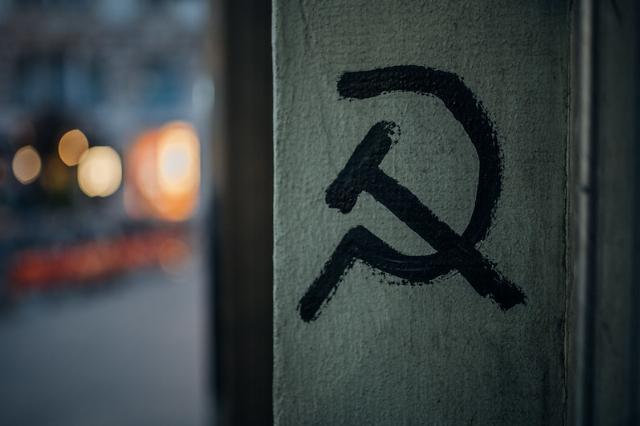
____________________________________________________________________
Shall we be a socialist paradise like France?
Let’s take a look at what France is actually like.
BY: Burton Abrams, The American Thinker (September 14, 2026).
The Democrat party and its members from the Democratic Socialists of America propose a wide range of policies alleged to make America more affordable. Based on an August 2026 Reuters/Ipsos poll, the Democrats are gaining traction, as a slight majority of those polled believe that Democrats have a better economic program than the Republican party.
If adopted, would Democrat policies succeed? Fortunately, we have France, a particularly good country to study, as it checks almost all the Democrats’ boxes. Studying France can give us a clearer picture of what the Democrat party is trying to sell us and the inconsistency between their goals and likely outcomes.
France has everything Democrats want: a Green New Deal, essentially free public universities (trivial amounts of tuition) through Master’s degrees, free health care for all citizens, open borders per E.U. arrangements, a higher national minimum wage.
France owns — or at least holds controlling interest or minority stakes in — many domestic enterprises: electricity/nuclear, rail, urban transit, airlines, defense contractors, among others. France taxes the rich more (49 percent is its top income tax bracket versus 37 percent in the U.S.), but this isn’t enough for the government’s spending appetite. France imposes a Value Added Tax that amounts to a national sales tax. It varies by categories but reaches a high of 20 percent.
Despite all the taxes, France still has a major budget deficit.
How does France’s economy compare to that of the U.S.? Is it more affordable there? If you believe that the government knows better than you on how to spend your money, you’ll like France. The French government spends 57 percent of its nation’s income. In the U.S., the number is 34 percent as of December 2025.
How does the American Dream of home ownership play in France? Households owning primary residences are 57.6 percent in France, 65 percent in the U.S. Average square footage of houses in the U.S. is 2,296; in France, it is 1,206. So Americans are more likely to own a residence, and a much larger one — about 90 percent larger.
France’s socialist policies have contributed to its national output per capita being substantially lower than in the U.S. Giving away free things tends to do that. U.S. GDP per capita in 2025 was $90,026, whereas France’s was $48,986. France’s unemployment rate is hovering above 8 percent, whereas the U.S. unemployment rate is approximately 4.1 percent. And if you are in favor of the Green New Deal and public ownership or control of the energy sector, note that the gasoline price is running above $9 per gallon in France. Electricity rates are higher as well, and air-conditioning is much rarer.
Think poverty is absent in France? Think again. Using France’s own definition of poverty, less than 60 percent of the national median income, it reports an overall poverty rate of 16.3 percent. The percentage of immigrants in poverty is 32.8, and for immigrants born in Africa, it is 39.7 percent.
This century, the U.S. annual real GDP growth rate has been 2.2 percent; France’s has been 1.36 percent. Since 2000, the U.S. real GDP has grown 76 percent. France has grown 41 percent. Small differences in growth rates add up to big differences in outcomes over time.
Any objective economist would end this by noting that the choice of an economic system is still ultimately an individual value judgment. But following socialist France in lowering U.S. national income, lowering economic growth, raising unemployment, making the American Dream harder to achieve, and giving a substantially greater share of our income to government to spend without the benefit of good French bread is for me a no-brainer. Non, merci!

GFK
 Observations From The Fifth Estate