“Punishment is justice for the unjust.”
–St. Augustine.
Today I share thoughts with you dear readers on government spending and overreach. Enjoy.
____________________________________________________________________
Today’s leftists are possessed by the spirit of France’s 18th-century guillotine-loving revolutionaries
BY: Victor Davis Hanson, The New York Post (September 6, 2026).
Trump and MAGA did not operate in a vacuum in the decade between 2015 and his re-election in 2024. His formal opposition was no longer the liberal Democrats of old but rather a new, far more radical manifestation. In their mission to fundamentally change the nation, they were more suited to 18th-century revolutionary France than 21st-century America.
The nature of the two-party system, of course, is to find ways to counter and even discredit the opposite party. Yet since the end of the Civil War, these disagreements had played out within accepted boundaries. But the decade of Trump, from 2015 to 2025, unleashed a hysteria unseen in over 160 years, one in which Democrats sought to destroy — not merely defeat — the candidate, then president, then ex-president, then candidate again, and finally re-elected President Trump.
What were the ideologies and motives that inspired their uniquely fanatical opposition?
One characteristic of the new radical Democratic Party was its pivot from solidarity with the middle classes to a movement of the wealthy and professional cadres as self-appointed protectors of the subsidized poor — a movement that reflected the 21st-century sources of influence and wealth within the Democratic Party.
Yet like the Jacobin movement of old, the new elites of the radicalized Democratic Party rarely felt that they should themselves be subject to the consequences of their own radical ideologies — whether climate-change taboos on personal energy use, open borders, defunding the police, etc.
Take, for example, the most radical firebrands of the new Democrats — Reps. Jasmine Crockett (D-Texas) and Ilhan Omar (D-Minn.) and Mayor Mamdani. They were all either children of the upper-middle classes or had claimed to be multimillionaires while in Congress or had arrived as immigrants from the ruling elite of their prior, usually illiberal, homelands — all in ways impossible for ordinary citizens.
Leftist elites proved ecstatic supporters of fringe issues — reparations to African Americans, transgendered athletes competing in women’s sports, and banning natural gas appliances. Such boutique obsessions either were of little relevance to or actively alienated the middle class and minorities.
The radical transformations started as early as the 2016 campaign. In their rhetoric, Democrats under once-moderate Hillary Clinton had become veritable Jacobins — the modern counterparts of French Revolutionary fanatics, as they substituted lawfare, radically transformed balloting laws and procedures, and weaponized federal agencies as their guillotine.
The left did not care whether a Trump position dovetailed with their own, was in the interest of the country or was popular. Instead, if they saw Trump’s fingerprints on a policy, they opposed it. Destroying this supposedly demonic public menace was worth appearing hypocritical or at odds with public opinion.
Never in their wildest imagination did the new Jacobins believe that they were tearing down protective norms and erecting in their place dangerous new precedents that might boomerang on themselves, especially if the supposedly permanently inert Trump ever returned to power.
So the new Democrats were oblivious to the ancient warnings of the historian Thucydides, who chronicled the horrific left-right cycles of revolution on the island of Corcyra (modern Corfu) during the Peloponnesian War and the sheer folly of demolishing legal and cultural norms that would shortly be missed by those who destroyed them:
“Indeed men too often take upon themselves in the prosecution of their revenge to set the example of doing away with those general laws to which all alike can look for salvation in adversity, instead of allowing them to subsist against the day of danger when their aid may be required.”
In 2020, an addled Joe Biden, in a Faustian bargain, had been nominated to provide a moderate veneer for this new hard-leftist Democratic Party. This Biden facade was necessary to conceal what became, after 2020, the most radical political agenda in modern presidential history, one implemented by this same Jacobin apparatus, which would never have been able to realize such dreams transparently or in normal times.
Aside from rampant inflation, massive deficits and DEI fixations, the most shocking of the new left-wing Democratic policies was the complete erasure of the southern border — a nihilism whose aim even neutral observers in retrospect could never really understand.
Under Biden and his Homeland Security Secretary Alejandro Mayorkas, the border simply and by design became nonexistent. Unfortunately, the influx occurred in an era when the tenets of the old melting-pot assimilationist and integrationist model had largely been damned out of existence.
During and after 2020, this same sort of Jacobin nihilism extended to almost every corner of American life. Mass looting and shoplifting in major blue-state cities were either lightly or not at all punished. In California and other blue states, stealing less than $950 worth of merchandise had been by ballot proposition officially deemed a misdemeanor, effectively precluding arrests, bookings, arraignments and jail time. That fact became well known to discerning criminals, and the impunity spread de facto nationwide following the death of George Floyd.
On a larger scale, the overall blue-state model that had emerged over the last two decades reached its logical breaking point. With huge voting pluralities, Democratic lawmakers had been free to put into practice some of their most radical immigration, crime, fiscal and diversity agendas.
Cities such as San Francisco, Los Angeles, Baltimore and Portland had become synonymous with high taxes, eroding infrastructure, weaponized jurisprudence, huge unfunded pension obligations, unserviceable entitlement costs, poor public schools, high crime, lawless homeless populations and assorted green, antibusiness and DEI regulations.
All this surrealism proved utterly unsustainable, and it, too, fueled the Trump renaissance, given that there was no sign the Democratic Party would repudiate its neo-socialist drift and tack back to the center.
The blue-state paradigm reflected a new medievalism, with the few very rich, the many poor and a declining number in between. States dominated by the Democratic Party that claimed to rectify inequality were the most asymmetrical in wealth distribution in recent memory. Blue congressional districts had more inequality than their red counterparts.
After the turn of the millennium, elites in our coastal cities, east and west, were newly enriched by free trade and the ensuing huge globalized worldwide audiences and markets. Those in high tech, finance, entertainment and elite universities suddenly enjoyed billions rather than millions of consumers and clients.
The resulting spectacular wealth — $9 trillion in market cap in Silicon Valley alone — encouraged a romantic, top-down mindset. All the old civilizational challenges of food, shelter, transportation and energy development were now assumed to be permanently solved by this new professional class, without any investigation about whether their nostrums had actually improved the lives of the rest of society. A functioning society was taken for granted, as if running on autopilot.
In short, the elites conducted their social experiments and put their agenda of high taxes, radical green mandates, lax law enforcement, hyperregulation and woke sermonizing into practice without injury to themselves. In contrast, the lower classes were the proverbial lab rats who suffered the consequences.
As Americans en masse fled blue states for red, the left was not particularly bothered. Instead, the attitude of California and New York was a nihilist tone of “good riddance.”
As one Silicon Valley fixture, Shankar Singham, put it, “If everyone in the middle class is leaving, that’s actually a good thing. We need these spots opened up for the new wave of immigrants to come up.”
The later election of the unapologetic Zohran Mamdani only confirmed the notion that the flight of capital was more or less welcomed.
Two core realities defined the new elite leftism. First, in their hubris, the privileged left assumed that human nature was malleable and fluid. Like the Marxists of old, they would invent, through mandated massive government intervention and investment, a “new American” whose mindset and behavior met their progressive requisites and produced a brave new world to come.
Second, central to the such social engineering was the idea of exempting the rulemaking elite themselves from the new fiats, reminiscent of the prerogatives of the Communist Party nomeklatura in the Soviet Union.
The old liberalism of the 20th century that had embraced traditional values was now rare in the new scolding Democratic Party that fixated on the boutique and trivial while ignoring the existential.
In the left-wing fixation on Trump and his white voters as supposed racists, the left cast all reason, all history to the wind. In the meantime, the new Democratic Party did not grasp that the more obsessed they became, the less popular they appeared, or that Trump might have deliberately trolled them to achieve just such an effect.
Therefore, over a decade, any failure of the Democrats to destroy Trump was met not with introspection but with renewed zeal as they blindly raced headlong to their self-made near ruin — and the nation’s.
____________________________________________________________________
Can We Throw Off the Yoke of Government?
Government—and those who feed off it—slowly but inevitably become our masters.
BY: Allan J. Feiffer, The American Thinker (September 4, 2026).
In June 1788, when New Hampshire became the ninth state to ratify the Constitution, America was born. In 1789, its entire payroll reportedly fit on a single ledger page, consisting mainly of customs officers, marshals, postmasters, and clerks. By 1800, the federal civilian workforce had grown to 125 people. By 1901, it had reached 231,000, including the Post Office. Today, the federal civilian workforce numbers approximately 2.7 million. Add another 1.7 to 2 million contractual employees, and the number is around 4.5 million—and this doesn’t count anyone in uniform. Next, count those in state and local government: another 20 million Americans! For perspective, there are only about 100–103 million full-time private-sector workers and 25 million people employed directly or indirectly by government; in round numbers, that translates into one out of every five Americans working for government. That imbalance is economically indefensible.
The size of the government workforce is only the first part of the story. Working for the government is often considerably more lucrative than working in the private sector. Federal employees receive significantly more total compensation than comparable private-sector workers, particularly those without a college degree. The average federal salary is an astounding $112,000. Add benefits, and total compensation rises to $150,000–$175,000. Federal employees work 210–225 days a year, compared with 235–245 days in the private sector. They receive heavily subsidized health insurance, a defined-benefit pension, and job security that is nearly impossible to match. State and local employees generally enjoy a similar advantage. Private-sector workers remain exposed to layoffs, changing market conditions, rising health care costs, and the possibility that their employer simply decides their position is no longer necessary. Government employment operates under a different set of rules, a consequence of a lack of a profit motive. Those rules matter because government compensation ultimately has to be financed by the productive economy—through taxation, borrowing, or inflation. When government spending grows faster than the supply of goods and services, prices rise because the government is injecting more money into the economy than the economy can absorb.
The difference becomes even more apparent over the course of a career. A federal employee under the General Schedule receives within-grade increases simply by staying around. Those increases occur at predetermined intervals, in addition to annual and locality pay adjustments. Most state and local governments have similar arrangements. Private employers frequently reward experience, but they decide whether the additional cost is justified. Government compensation systems make these decisions automatically, treating pay increases as entitlements rather than cost‑benefit judgments. A government employee can accumulate compensation advantages simply by being a warm body. The private employee often has to change employers, negotiate, or demonstrate increased value to obtain a comparable increase.
Government employees typically receive more paid time off through holidays, sick leave, vacation, parental leave, and administrative leave. Many state and local employees also work fewer hours than the conventional 40‑hour private‑sector week, some as few as 32 hours. This does not mean every government employee is lazy. There are dedicated public servants whose work is difficult and/or essential. The issue is the structure. If an employee receives full-time compensation while working substantially fewer hours, the effective cost of that labor is higher. If an agency employs more people than it needs, costs expand commensurately. That cost eventually shows up in taxes, borrowing, reduced public investment, or slower economic growth for our country. And sometimes the consequences are more serious than an inefficient budget.
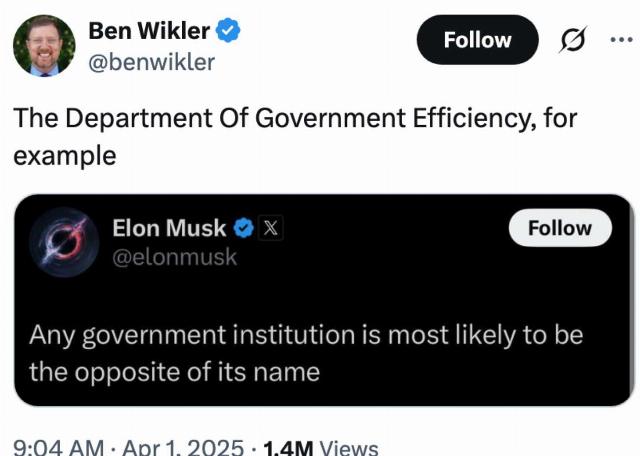
Graphic: X Post
In March 2026, an Air Canada Express jet landing at LaGuardia collided with a fire truck that had been cleared to cross the runway, killing both pilots and injuring dozens. The subsequent investigation revealed that two air traffic controllers had left work without permission about an hour early, a practice the FAA characterized as systematic time‑clock fraud. Their departure contributed to understaffing at a critical moment, leaving one controller to manage multiple responsibilities during an emergency. Air traffic control depends upon trained people being where they are supposed to be when they are supposed to be there. The LaGuardia accident demonstrates what happens when staffing, work schedules, or accountability don’t rise to what the public assumes it is paying for.
Sometimes government inefficiency is measured in lives.
Government is no longer simply an institution Americans entrust to perform certain functions; it has become an enormous self-serving economic ecosystem. Every new program creates new positions. Every expansion of government creates permanent new spending, leading beneficiaries to acquire a direct economic interest in preserving the system that benefits them. Allowing government employees, either directly or through unions or dedicated PACs, to make campaign contributions or provide in-kind services creates an incestuous relationship between government employees and their elected leaders, leading to indefensible loyalties.
That does not require corruption; it reflects ordinary human proclivities. A government employee prefers continued government employment, while a contractor dependent upon federal contracts opposes cuts. An organization receiving government grants defends the program providing them.
Every expansion of government creates another constituency interested in maintaining it. This helps explain why government grows more easily than it contracts, as employees know they’re unlikely to find similarly lucrative employment in the private sector. Over time, government consumes an ever larger share of the pie, creating the yoke.
The government of 1789 could fit on a ledger page. Today’s government employs or financially supports tens of millions of people. That transformation did not occur overnight; it grew incrementally. One program, one agency, one new benefit, one more layer of administration was never seen in its totality; it was just too easy to add them, never looking back. The obvious answer: Zero‑based budgeting. Frightening to government leaders because it would reveal waste and inefficiency they would be forced to address.
Eventually we wound up with 25 million government employees, millions more dependent upon government contracts, and an enormous system whose beneficiaries have a manifest interest in preserving it. The yoke was built slowly, by people who believed they were doing good. But a burden is no lighter just because it was created with good intentions. The weight of that yoke is felt not in Washington but by the citizens who fund it and suffer the other losses that an inefficient government inevitably imparts. If Americans want a freer and more prosperous future, they will have to confront a difficult reality: reducing government means changing the incentives of millions who now depend upon it. Before we can throw off the yoke, we must recognize how heavy it has become and accept the necessity to address it. Otherwise, government—and those who feed off it—slowly but inevitably become our masters.
____________________________________________________________________
Where all government spending comes from
Let’s not be naïve about this.
BY: Jay Davidson, The American Thinker (August 29, 2026).
We hear about this right and that, about the needs of the many that can be met only through government spending. We elect politicians whose stated goal is to pass new laws and new spending initiatives for our benefit. But do we ever question where the money comes from that our government spends?
Let’s take the example of tariffs, although we could just as easily substitute taxes or fees. Let’s ask who really pays the tariffs our government is imposing on imports.
First, corporations don’t pay tariffs. They pass them on to customers in the form of higher prices.
Second, consumers pay the tariffs.
Third, all of the tariffs imposed on domestic imports are paid by American consumers.
Fourth, therefore, tariffs are just another tax on American citizens.
Finally, all tariffs, taxes, and fees are taken from the person who earned the money and transferred to our government. Every dollar our politicians spend is a dollar taken from the private citizen and voter.
Customs duties had been the federal government’s fastest-growing source of revenue through 2025, driven by a rash of new tariffs imposed by President Trump, including IEEPA (International Emergency
Economic Powers Act) tariffs that accounted for roughly half of collections.
The Republican Party of my youth would recoil at the current philosophy of more taxation, more spending, and more government intervention in our lives. Yet that is exactly what most politicians have done. Is there a difference between Democrats and Republicans in this tax-and-spend mentality?
Okay, maybe a few more Rs object to tax and spend, but not the majority. While the Rs stumble in confusion, the Ds are going socialist and communist. What happened to the center, the moderate, the independent spirit of our forebears? The ones who said, Leave us alone; we will take care of our own. We don’t need your federal hands in our pockets, and we don’t need another law, rule or regulation?
Here is another maxim: All federal revenue is taken from the private sector, from private citizens. Every penny taken through taxes, fees, or tariffs comes out of the pocket of citizens. Even the debt our government incurs is paid for by the citizen. Government is not capable of making money; it subsists by taking.
All federal income generation (taxes, fees, tariffs, debt) is used by members of the federal government (politicians and bureaucrats) to facilitate government spending. Just how effective has that spending been?
We citizens have three rights, and only three: life, liberty and ownership of property. All taxes, fees, and tariffs take from the earner and funnel the takings into a highly inefficient government bureaucracy. Is this not an impingement on our inalienable right to ownership?
Since when does a bureaucrat know better what to do with money you earned through your own labor? Yet that is what we do every time a politician increases government revenue through spending.
Here is another maxim: Every law, rule, and regulation is control over the individual by his government. How ironic is it that our government takes (taxes, fees, tariffs) from us in order to control us (laws, rules, regulation)? And we let them.
There is no right for one person or entity to impose his will on another. We all have the right to liberty, to free will, to our own choice.
This not a cry for anarchy. Quite the opposite — this is a plea to adhere to the Declaration of Independence and the Constitution. We are all independent and sovereign beings endowed by our creator will three inalienable rights. It is time for less government and more individual freedom — liberty.
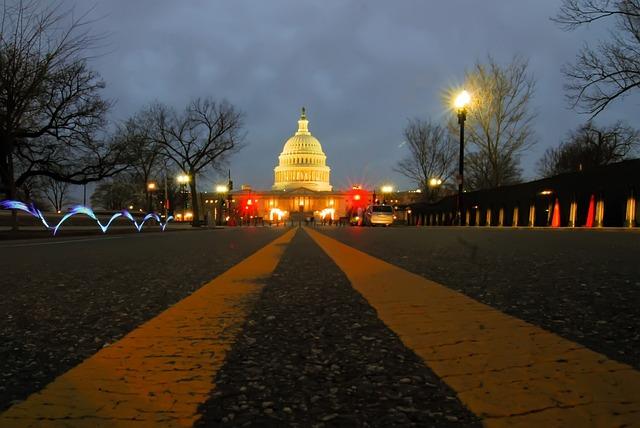
____________________________________________________________________
The difference between rights and entitlements in American political life
A right that requires another’s labor is an entitlement, not a right.
BY: Christian Vezilj, The American Thinker (September 2, 2026).
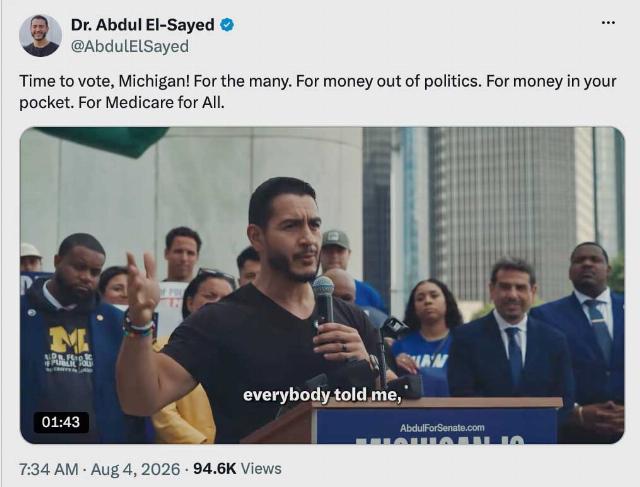
In today’s political environment, the term “rights” is used so casually and so often that its original meaning has almost vanished. Politicians talk about having a “right to housing”, a “right to affordable food”, a “right to free healthcare”, a “right to childcare”, a “right to transportation”, and even a “right to a livable wage”. Since these expressions are so constantly repeated, they have become familiar and even seem moral. However, familiarity does not mean that they are true, and repetition does not make them align with the American founding.
The Founders made it plain that rights originate from the Creator, not from the government or from other citizens. A right is one that you have simply because you are a human being; it is inherent, natural, and entirely self-contained. It does not necessitate anyone else giving up their labor, their money, their skills, or their property if you are to exercise it. What is a real right is something that you can enjoy without making anyone else take any action.
The core of natural rights is the list of rights set out in the Declaration of Independence: the right to life, the right to liberty, and the right to pursue happiness. The Bill of Rights follows the same pattern. Every amendment protects a freedom that does not require another person’s involvement. Freedom of speech does not require anyone to listen. Freedom of religion does not require anyone to fund your church. Freedom of the press does not require anyone to buy your newspaper. The right to bear arms does not require anyone to purchase a firearm for you. Due process does not require another citizen to sacrifice their property or time. This distinction is not a minor detail. It is the foundation of American liberty.
Yet modern politics often blurs this line. When politicians declare that citizens have a “right” to free healthcare, free housing, free childcare, or free transportation, they are not describing rights. They are describing entitlements — benefits that require government to take from one group and give to another. These entitlements may be debated, supported, opposed, expanded, or limited. But they are not rights in the Founders’ philosophical sense.
A right that requires someone else’s labor is not a right. It is a claim on another person. It is a demand that someone else must work, must pay, must provide, or must sacrifice so that you may receive. And if government enforces that claim, it must do so by confiscation — taking the fruits of one person’s labor and transferring them to someone else.
This is not the American understanding of rights. It is a different philosophy entirely, one rooted in the idea that government exists to manage society, allocate resources, and guarantee outcomes. The Founders believed the opposite: that government exists to protect individual liberty, secure property, and prevent coercion.
The American vision is simple and profound. Rights come from God. Property comes from labor. Charity comes from choice. Government’s role is not to provide for citizens but to protect their freedom to provide for themselves. When government begins to guarantee goods and services under the banner of “rights,” it transforms citizens from free individuals into recipients of state-managed benefits. It replaces personal responsibility with political dependency. And it replaces natural rights with political entitlements.
The language of rights matters because it shapes citizens’ expectations and the power of government. When everything becomes a “right,” nothing remains a right in the original sense. The word loses its meaning. And the government gains authority to redistribute, regulate, and control in the name of fulfilling these newly invented “rights.”
The Founders understood that freedom requires limits — not on citizens, but on government. They built a system where individuals could pursue their own happiness without forcing others to surrender theirs. That is the American promise. And it remains true today: a right that requires another person’s labor is not a right. It is a political entitlement, and it must never be confused with the God‑given rights that define American liberty.
GFK


How do you like paying 6.00++ for a gallon of diesel????
LikeLike
Victor has to be one of the brightest human beings in this country. Quite the historian!
Get Outlook for iOShttps://aka.ms/o0ukef
LikeLike