“From this Nation’s founding until the last few decades of the 20th century—a period that spans the enactment of all three election-day statutes—having an ‘election’ on a particular day meant completing ballot collection on that day. Not only is today’s decision inconsistent with statutory text, legal context, historical practice, and precedent; it also threatens to produce lamentable consequences. The majority’s holding spawns a slurry of troubling election-law questions and risks further undermining Americans’ confidence in election integrity. By allowing States to continue receiving new ballots during these drawn-out processes, today’s decision will only exacerbate voters’ distrust. Today’s decision is inconsistent with the terms of the election-day statutes, contemporary election-law principles, two centuries of historical practice, and the case law on the question presented. It opens up and fails to resolve a host of questions for state election officials and courts. And it creates a serious risk of further undermining public confidence in our elections and our system of self-government. I therefore respectfully dissent.”
–Associate Supreme Court Justice Samuel Alito, writing in dissent in Watson v. Republican National Committee. The case challenged Mississippi’s law allowing mail-in-ballots to arrive up to 5 days after election day.
Remember when there was an Election Day, and not “Election Month”?
“The court today takes the extraordinary step of holding facially unconstitutional the President’s Order excluding from citizenship the children of foreign temporary visitors and illegal aliens. In doing so, the court adds to the sad history of the Fourteenth Amendment, which was designed and understood to secure equal rights for the freed blacks but has instead been repurposed for political projects that the Reconstruction Congress did not support. [The Citizenship Clause] was consistently interpreted not to apply to the children of foreign temporary visitors, who were by definition not domiciled in the United States . . .
I am not sure that today’s opinion will stand the test of time. The Citizenship Clause ‘added greatly to the dignity and glory of American citizenship.’ Today’s opinion devalues that citizenship.”
–Associate United States Supreme Court Justice Clarence Thomas, dissenting in Trump v. Barbara, a case challenging the President’s Executive Order directing federal agencies to not take any action treating persons born in the United States to illegal aliens, as citizens.
How can someone who rejected the legitimacy and jurisdiction of our nation’s laws be thus “subject to the jurisdiction thereof”, and given the privileges associated with our laws? Does this make any sense to you?
Many Americans believe that the United States Supreme Court’s decisions on the Constitution are “supreme”, perhaps infallible, and that no one–not the President, not the Congress, and certainly not any States or citizens–can challenge their authoritative decisions. These Americans believe that the Constitution grants the Court his right. It does not.
Nowhere in the United States Constitution does it make the courts the sole arbiters of the Constitution’s meaning. The Supreme Court is not above the Executive or Legislative branches. It is a co-equal branch. And every branch has the power and duty to evaluate its actions in light of the Constitution. A President should not act in violation of the Constitution. The Congress should not legislate in violation of the Constitution. And the Court, when deciding a case or controversy, should not rule in violation of the Constitution.
But the myth prevails that if the Court rules that something is constitutional, or unconstitutional, that that is the end of it. And that is pure horse hockey.
In 1896, the Supreme Court ruled that a Louisiana law segregating public facilities by race was constitutional, thus beginning the rule of “separate but equal”. Does any reader really believe that decision was correct?
In 1942, the Supreme Court ruled that a farmer not engaged in interstate commerce, was, in fact, engaged in interstate commerce, by not engaging in interstate commerce. That decision still stands. Make any sense to you?
In 1973, the Supreme Court ruled that the federal Constitution contained a right to abortion. Please go read the Constitution, and contact me if you find the right to an abortion anywhere in the text.
In 1986, the Supreme Court upheld a Georgia law criminalizing sodomy. It was a State issue. But then in 2003, the Supreme Court decided that sodomy–an action, not an immutable characteristic subject to civil rights considerations–was actually a federal issue after all, and struck down a Texas law criminalizing sodomy. Again, please go read the Constitution. Contact me if you can find the word “sodomy” anywhere in the text.
In 2012, the United States Supreme Court considered the legality of the Obamacare statute in NFIB v. Sebelius. The statute provided that if a citizen did not maintain health insurance for himself, the federal government could punish him. In other words, the federal government could compel a citizen to buy a product. The hearings were held over 2 days. On day 1, the Supreme Court considered if Obamacare was a tax. Because if it were, then the challenges to it must fail. On day 2, the Supreme Court considered the substance of Obamacare, assuming it was not a tax. The Supreme Court ruled, in an opinion written by the cowardly Chief Justice John Roberts, that Obamacare was not a tax, therefore the challenges to its substance could proceed. Then that very same Chief Justice Roberts held that Obamacare was constitutional, because it was a tax. Did you follow that? It makes less sense than Wickard v. Filburn.
Finally, in Obergfell v. Hodges, issued in 2015, the Court ruled that the 14th Amendment meant that States could not limit “marriage” to 1 man and 1 woman. The federal Constitution does not govern marriage. It is not a federal issue. And nowhere in the 14th Amendment does it confer civil rights considerations on conduct.
I could go on and on about Supreme Court abuses and failures. I am not trying to criticize specific decisions by the Court so much as to correct a misconception. The point I am trying to illustrate is that the Court is not infallible. And the Court is not “supreme” in the sense that it is the last and only word on any given subject. Set forth below are some far more scholarly pieces which I hope might give you a better understanding of the Court’s limitations. Enjoy!
___________________________________________________________________
Is the Supreme Court the Final Word on the Constitution?
The answer may surprise Americans raised on the myth of judicial supremacy.
BY: Donald Devine, The American Spectator (June 23, 2026).
It is astonishing how many Americans have been misled by the progressive law school fable that the Supreme Court is somehow above politics and should be placed at the apex of federal power as the final interpreter and owner of the Constitution—at least as long as progressives have a majority of justices!
Sarah Isgur’s new book, Last Branch Standing, is an excellent example. But in this case, Social Sciences Dean at Hillsdale College, Paul D. Moreno challenges the progressive myth in an excellent review. While giving her credit for recognizing that in fact the current Court is not led by some dominating conservative majority but is divided between three factions: 3 progressives, 3 moderate conservatives, and 3 conservatives — he goes to the heart of the matter.
Isgur is too prone to take contemporary judicial supremacy for granted. In her historical overview of the Court, she asks, “How did we end up with this Supreme Court — unique in the world — and perhaps the only one of the three branches that our Founders would recognize today?” In fact, it’s no longer unique in the world, and it is emphatically not the one that the Founders would recognize. I’d say that no feature of today’s current political system would surprise them more than judicial supremacy.
In fact, Moreno continued, “the belief that the Court had the last word in constitutional interpretation is a relatively late development. It was not until 1958, in Cooper v. Aaron, a school-desegregation enforcement case, that the Court overtly stated that its interpretation of the Constitution was as much the ‘supreme law of the land’ as the Constitution itself.”
In that same era, my generation was specifically taught by Yale University’s Robert Dahl’s sophisticated empirical analysis that scores of Supreme Court decisions had actually been overridden by Congress over the years. More recently, the Civil Rights Act of 1987 even overruled the Supreme Court’s Grove City v. Bell civil rights decision by name.
President Andrew Jackson not only refused to enforce the Supreme Court’s Worster v. Georgia decision but also specifically argued that all three branches equally interpret the Constitution. As Moreno also noted, even Abraham Lincoln questioned whether the Dred Scott decision was Constitutional as early as 1857. Lincoln led a Civil War to overrule this Supreme Court ruling with his Emancipation Proclamation, which was confirmed by the 13th Amendment.
It is no secret that with the coming of Wilsonian Progressivism, the New Deal, and the Great Society, things changed radically in favor of judicial supremacy. Progressive Supreme Court leaders like Earl Warren, William J. Brennan Jr., William O. Douglas, Louis Brandeis, and Thurgood Marshall led the way and were incredibly successful in nationalizing law, policy, and power over states’ rights.
Even with today’s moderate judicial retreat from that earlier legal progressivism, some right-leaning intellectuals like Ramesh Ponnuru have argued that today’s court has moved back too far toward states’ rights. Ponnuru recognized that some state government policy conflicts with Washington “are inevitable and perhaps even healthy in our system.” But at the end, he argues that national “rules must restrain those conflicts so that they do not undermine important national goods.” Ponnuru argues that today’s Supreme Court justices have become less and less willing to enforce limits on the states. These “have read the specific rules narrowly and are moving toward a version of the dormant commerce clause that stops only those policies that explicitly target other states’ economies.”
Today’s conservative judges are simply considered “skeptical of restrictions on the states.” Those justices “committed to originalism” believe that “laws should be interpreted as the public understood them at the time they were enacted.” Many even believe that the whole 20th-century interpretation of the commerce clause is simply “not in the text of the Constitution,” nor can the document explain how to interpret it.
These originalists, of course, are Justices Neil Gorsuch, Samuel Alito, and Clarence Thomas; and to a lesser degree, Brett Kavanaugh, John Roberts, and Amy Barrett. These are the more conservative judges who believe they are simply reversing what they consider were the extreme progressive court interpretations of the 20th Century. They particularly objected to courts moving from narrow interpretations of “procedural due process” into a much broader “substantive due process” that dramatically increased national power and limited 10th Amendment rights.
The right critics justify a broader view of due process as necessary for free markets and commerce. While substantive due process originated there, the drastic increases in Washington’s power over states more recently have limited state social policy powers — on issues such as marriage and the family, raising and educating children, on contraception and reproductive choice, on sexual privacy, on intimate relationships, and on abortion rights procedures — none of which have a national basis in the Constitution except by judicial fiat.
As Moreno noted, Justice Clarence Thomas’s 2022 concurrence in Dobbs suggested that much more needs to be done for a wholesale reconsideration of the Court’s 20th-century rush from its original, limited Constitutional procedural interpretations into vague and too broad substantive misinterpretations, creating new “rights,” often resulting in much of today’s social disorder.
In fact, from the very beginning, the Constitution has been a separation of powers instrument in which each of its five institutions — legislative, executive, judicial, states, and amendment — divides powers and rights where no institution has the final word and can challenge each other. Congress can pass new laws, states can mitigate and pass amendments, and the executive can interpret through enforcement actions to mitigate legal decisions.
But for the last half-century or so, the courts have overreached their powers, and it has taken the other institutions time to slowly create the conditions for a federalist rebalance more consistent with the original Constitution.
The way back requires interpretations and policies more consistent with the decentralized and balanced federalism that was built into the actual Constitution.
____________________________________________________________________
The Court’s problem children
How we get a crippled Supreme Court.
BY: Allen Hurt, The American Thinker (July 4, 2026).
A woman I know told me a story. She happened to be outside a store where she was taking care of her five-year-old grandson while her daughter, the boy’s mother, was across town running some errands. Three teenage boys burst out of the store and sprinted off, carrying a bag they had obviously just stolen. The shopkeeper emerged and asked the woman which way they had gone. The woman imagined herself spending the rest of the day filing police reports, her grandson in tow. So she told the shopkeeper that she didn’t see them.
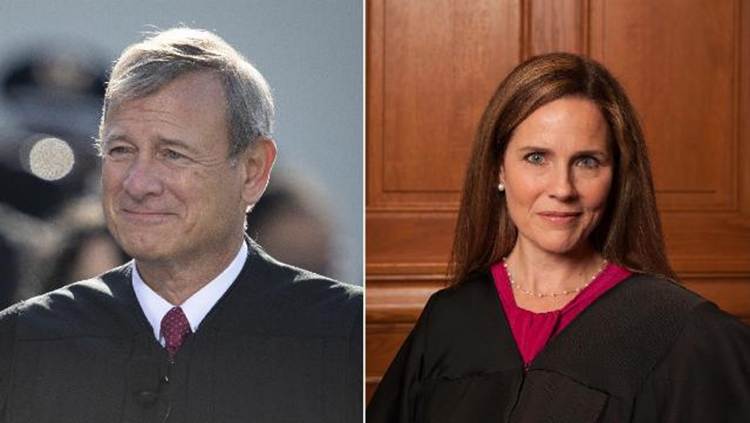
That is Chief Justice John Roberts. His dread of controversy compels him to squirm out of principled decisions. More times than not, he sides with the status quo for the simple fact that he knows he will take less heat for sticking with it rather than changing it. His default position is Do Nothing. Do nothing with ObamaCare by calling it a tax. Do nothing with the spurious 2020 presidential election by denying the appealing attorneys general standing. Do nothing about allowing children born here to non-citizens to automatically become citizens by cobbling together some legal gobbledegook. These are just three examples of where his sacrifice of principle has caused America immense harm. Taking a principled stand can take courage. Substituting expediency for principle never does.
Another story. I know a brilliant woman. She is MENSA. She graduated at the top of her class and rose to the pinnacle of her profession. She can debate you until you surrender and destroy you at chess. But she can’t drive a car. It’s terrifying to be in one with her when she tries. Mundane, practical, day-to-day decisions are difficult for her. She left her devoted husband in search of romance, and now she’s alone. Her mind makes her a queen in the academy and an urchin on the street.
This is Associate Justice Amy Coney Barrett. There’s no connection between a decision and its consequences. Wisdom is the application of knowledge, intellect, temperament, and experience to solving a problem. Decisions tethered by wisdom are like kites that dance steadily in the wind. Decisions untethered by wisdom are kites that careen between unforeseen, unintended consequences until they inevitably crash to earth as ruin and wreckage. A shortage of wisdom explains why a fine person with a fine intellect can make such shockingly ghastly bad decisions, as she just did on the birthright citizenship matter. She can’t foresee the consequences of her decisions. Our problem is that when it comes to wisdom, you either have it or you don’t, and she’ll likely be on the bench for a long time.
____________________________________________________________________
That pesky 14th Amendment
The 14th Amendment requires a lot of interpreting…and that is the problem.
BY: Mark C. Ross, The American Thinker (July 4, 2026).
When reading through the U.S. Constitution, the 14th Amendment marks a significant departure — not in intent, but in the first adoption of the language of complex legalese when compared to the previous language thereof. The entry just before the 14th
Amendment to the Constitution, the 13th Amendment, simply states in its entirety that “neither slavery nor involuntary servitude, except as a punishment for crime whereof the party shall have been duly convicted, shall exist within the United States, or any place subject to their jurisdiction. Congress shall have power to enforce this article by appropriate legislation.”
Plain-spoken, concise, and unambiguous, especially when compared to the subsequent additions to the supreme law of the land. Henceforth, however, the lawyers sharpened their pencils and got seriously into the mix. Unraveling the objective meaning of the 14th Amendment is actually an eternal task, meaning that all results will be subject to interpretation. This is not how law should be administered.
It is painfully obvious that “birth tourism” should not be valid, but it still is. And bedeviling the argument over birthright citizenship is the meaning of the term “the jurisdiction thereof.” Yeah, subject to interpretation — which is not a good foundation for a legal principle.
Kurt Schlichter at least hints at the SCOTUS majority’s motive being a reluctance to rock the boat, since a dilemma would occur over the disposition of possibly millions already having questionable citizenship — and makes a good case for this not being the end of the struggle to rationalize America’s immigration policy. It may be reasonable to assume that the fuse has been lit for the eventual correction of this defect.
What should also be mentioned is a reminder of why John Roberts is the current chief justice of the U.S. Supreme Court. Back when he was being considered for a position as an associate justice, the then–chief justice, William Rehnquist, suddenly assumed room temperature. For the sake of efficiency, the “rulers” of America pushed Roberts up into the vacated position.
Henceforth, we have languished under the judicial dictates of the Roberts Court. Pursuant to the latest “birthright” decision, renewed attention to the SCOTUS and its future has been uncorked. Both sides are gearing up, I suppose, for a protracted struggle. Whoever said the Supreme Court reads the election results knew what he was talking about.
_______________________________________________________________
What would George Washington do?
He would surely address a feckless Supreme Court, democratic socialists, sanctuary cities
BY: Robert Knight, The Washington Times (July 5, 2026).
Our family recently took in the new, improved Mount Vernon. Frankly, it knocked our socks off.
George Washington’s 18th-century mansion and grounds are superbly restored, and there are a Smithsonian-quality museum and a riveting film about the Revolutionary War. It even snows inside the theater at one point.
Without George Washington, the United States of America would not have happened. Commander of America’s armed forces, and later the first president, he was utterly indispensable.
The Colonists had plenty of reasons to revolt. King George III and Parliament had imposed intolerable conditions, such as quartering soldiers in Colonists’ homes and demanding a “stamp tax” on all documents and transactions.
Battling extreme hardship and the greatest world empire at the time, Washington’s army dropped from 20,000 to only 3,000, and the cause seemed hopeless. Yet they fought from April 19, 1775, to the British surrender at Yorktown on Oct. 19, 1781, securing victory with help from the French fleet.
Washington, who with his wife, Martha, never had biological children of his own, became the father of his country. Offered a chance to be king, he went home instead.
As revealed in books such as “George Washington’s Sacred Fire” (Peter A. Lillback with Jerry Newcombe, 2006), he was fueled by a deep Christian faith, something conspicuously absent from Mount Vernon and modern revisionism.
The museum has some other quirks, such as ignoring Thomas Jefferson and barely mentioning the Marquis de Lafayette. Still, it respectfully chronicles the inconvenient reality that Mount Vernon had many slaves, most of them acquired from the estate of Martha’s first husband. It is handled well without overshadowing Washington’s importance.
Washington made being an American citizen one of the most valued privileges in the world.
I thought about this while poking through the legal wreckage of the Supreme Court’s 6-3 decision on June 30 in Trump v. Barbara, which upheld birthright citizenship. It applies even to babies born to illegal aliens and to “birth tourists” who come specifically to create new U.S. citizens.
The ruling written by Chief Justice John G. Roberts Jr. qualifies nearly anyone in the world to have a baby on U.S. territory and create an instant citizen. As Justice Clarence Thomas wrote in his dissent, this “devalues” American citizenship.
Solicitor General D. John Sauer informed the court in April about evidence cited by members of Congress that communist China is sending hundreds of thousands of women to U.S. territories to have babies, bring them home and indoctrinate them, “creating a whole generation of American citizens abroad with no meaningful ties to the United States.”
This did not matter to the court’s majority, which seemed to decide that the Constitution is a suicide pact.
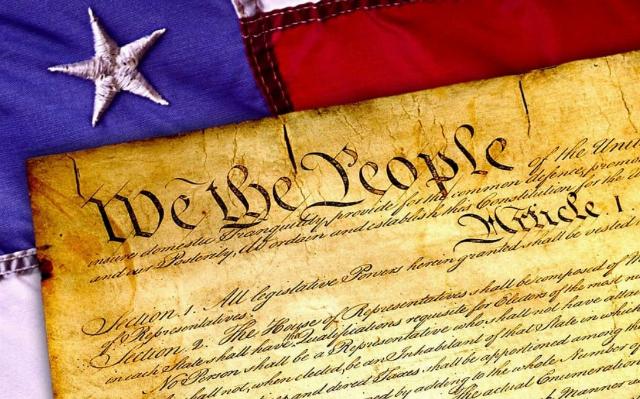
The 14th Amendment states that, “All persons born or naturalized in the United States, and subject to the jurisdiction thereof, are citizens of the United States and of the State wherein they reside.”
The court chose to pretend that “subject to the jurisdiction thereof” is superfluous.
If simply being born on U.S. soil establishes citizenship, the “jurisdiction” phrase cannot logically mean the same thing. It is a caveat added to protect children born of freed slaves after the Civil War. In fact, the 1866 Civil Rights Act acknowledges citizenship only to people “not subject to any foreign power,” such as babies born to foreign nationals.
These points were raised in powerful dissents by Justice Thomas and Justice Samuel A. Alito Jr.
The United States is one of only a few countries still allowing birthright citizenship. For example, if an American woman gives birth in Tokyo, the child is not a Japanese citizen.
At the end of last month, the court delivered its most controversial decisions before recessing. On June 30, the justices rightly upheld the right of states to protect female athletes by barring males from competing in female sports. Only the three leftist women dissented.
Yet in Watson v. Republican National Committee, a June 29 opinion written by Justice Amy Coney Barrett, the justices rejected a challenge to state laws allowing the tallying of mail-in ballots after Election Day. In his scathing dissent, Justice Alito said there was no better way to undermine faith in fair elections than to count ballots for days and even weeks afterward, especially in close races.
We are living in a perilous time. Hundreds of thousands of foreigners, legal and illegal, are minting new U.S. citizens. The Democratic Party is being overrun by openly communist and Islamist candidates under the democratic socialist banner. They are taking power in states with sanctuary cities, massive welfare fraud, compromised voter rolls, no photo voter ID laws and astronomical numbers of illegal aliens joining the “free stuff” army.
Given the court’s reluctance to protect U.S. citizens from what amounts to a foreign invasion, the U.S. Senate has no excuse for failing to vote to pass the SAVE America Act to restore election integrity.
In the birthright citizenship ruling, Chief Justice Roberts wrote, “In the odious decision of Dred Scott v. Sandford [1857], this Court imposed the Southern States’ beliefs onto the Nation.”
Yes, and here is some updated phrasing: “In the odious decision of Trump v. Barbara, this Court imposed the Sanctuary Cities’ beliefs onto the Nation.”
I doubt that George Washington could possibly have conceived of what is happening today in America right before our eyes — and I think he would have found a way to do something about it.
GFK
 Observations From The Fifth Estate