“The Church has always taught that all our penance without Christ’s passion is not worth a pea.”
— St. Thomas More.
Today I am sharing some random thoughts I have, through articles I have read recently. For example, I detest Daylight Savings Time. There is a wonderful commentary on it. I wholly support the U.S./Israeli attacks on Iran, and I am sharing commentary on the President’s power to make war versus Congress’s power to declare war. Astute readers know that the 2 powers are not the same. The President does not need Congress’s permission to engage in military hostilities. Congress has the power to restrict the President’s military actions. And both branches need to cooperate for the good of the country.
And finally, there is a story about Patrick Henry, one of America’s greatest all-time orators. A patriot, Governor of Virginia, and the namesake of 2 Virginia counties and 1 community college, Patrick Henry left his mark on early America. All Virginia schoolchildren learn of his famous speech, ending with the infamous phrase “Give me Liberty or give me Death!”. But this story is about Patrick Henry’s short lived tenure in the Continental Army. Enjoy.
Controlling the clock
Daylight Saving Time is a monument to bureaucratic inertia and a recurring demonstration of state power.
BY: Steve Hric, The American Thinker (March 10, 2026).
At its heart, the sun is the only clock that has ever truly mattered. It is the elemental, unchangeable force that governs life, agriculture, and the fundamental rhythms of human existence. Yet, for over a century, governments have engaged in a peculiar form of hubris: the bi-annual manipulation of time itself, known as Daylight Saving Time. While sold to the public as a commonsense tool for energy conservation and wartime efficiency, the history of DST reveals a far more troubling pattern. It is the story of a flawed, illogical idea that became a recurring instrument of state control, proving that when given a choice, centralized power will often opt for the most disruptive solution if it best demonstrates its own authority.
The foundational premise of DST is so illogical that it borders on the absurd. If the goal were simply to align human activity with daylight to reduce energy consumption or increase productivity, the solution is straightforward: businesses, factories, and schools could simply adjust their operating hours. A factory could declare “summer hours” from 7:00 AM to 4:00 PM and revert to a 9-to-5 schedule in the winter. This targeted approach is efficient, flexible, and voluntary. It allows individual sectors to adapt as needed without inflicting systemic chaos.
Instead, the architects of DST chose to change the “total clock.” They embraced a sledgehammer solution, forcing every citizen, system, and industry onto a new, arbitrary timeline. This is akin to redefining the length of a mile to make a commute seem shorter.
The choice was not one of logic, but of control. It established a precedent for a top-down, one-size-fits-all mandate that disregards the complexities of a modern, interconnected world. The consequences of this choice are not trivial. For global industries like maritime shipping and aviation, which run on the standardized and immutable clock of Coordinated Universal Time (UTC), DST is a recurring nightmare. It introduces a layer of chaos that costs millions in delays, scheduling recalculations, and contractual disputes. A ship’s carefully planned arrival at high tide can be thrown off, a flight crew’s legal duty hours can be instantly violated, and a passenger’s international connection can be severed, all because a local government decided to “f*ck with the sun.”
The true nature of Daylight Saving Time is revealed not in its flawed logic, but in its political history. Its implementation and expansion in the United States do not map to moments of rational problem-solving, but rather to moments of crisis that were used to justify the dramatic expansion of federal power. This is not a coincidence; it is a pattern.
- Woodrow Wilson and World War I: The first nationwide implementation was a product of the Progressive Era, an ideology that believed in using the “scientific” power of centralized government to manage society for the national good. War provided the perfect justification.
- Franklin D. Roosevelt and World War II: FDR, who oversaw the greatest expansion of federal power in American history, instituted year-round “War Time,” a totalizing federal action for a total war.
- Lyndon B. Johnson and the Vietnam War: The Uniform Time Act of 1966, which sought to end the confusing patchwork of local observances, was a classic “Great Society” program. It imposed a single federal standard, reflecting the era’s belief in centralized solutions, all while a major war provided the backdrop for calls for national efficiency.
This pattern transcends party lines, exposing a shared governing philosophy. Republican Richard Nixon, whose presidency oversaw the creation of the EPA, OSHA, and the removal of the gold standard, did not hesitate to impose emergency year-round DST during the 1973 oil crisis. He was a pragmatist of federal power, proving the impulse is inherent to the state itself, not a single party. The history culminates in its most cynical chapter under George W. Bush, whose 2005 Energy Policy Act extended DST. Despite decades of data showing negligible energy savings and significant disruption, the federal government’s instinct was not to fix or abolish the failed program, but to expand it — a symbolic political gesture masquerading as a solution.
Ultimately, Daylight Saving Time is a monument to bureaucratic inertia and a recurring demonstration of state power. It is a solution in search of a problem, a tool that creates more chaos than it resolves. The simple, logical act of adjusting a work schedule was passed over for the arrogant, complex, and disruptive act of changing time itself. The reason is now clear: one is an act of practical freedom, the other an act of control. And for over a century, control has won.
__________________________________________________________________
The President Doesn’t Need Permission to Defend America
The Constitution does not require Congress to approve every defensive strike.
BY: Mark Goldfeder and John Spencer, The American Spectator (March 7, 2026).
On Thursday Congress will vote to limit President Trump’s ability to carry out further attacks in Iran. The criticism surrounding the launch of Operation Epic Fury, mostly from the left, follows a predictable script: “No declaration of war.” “No vote.” “Unconstitutional.” Some of it is sincere, some of it reflects selective readings of history. But the premise that a president is legally paralyzed when Americans are under threat unless Congress grants advance permission is entirely wrong, and has never been how the constitutional system operates.
If Iran or its proxies are attacking U.S. forces, targeting Americans abroad, or setting the conditions for imminent harm, the President does not need to wait for a roll call vote to defend the country. Article II vests the President with Commander in Chief authority precisely because national defense sometimes requires speed, secrecy, and unity of command. Congress has long structured statutory frameworks around that reality.
This is not an “imperial presidency.” It is the basic design of American constitutional defense powers. For decades, executive branch lawyers of both parties have articulated the same principle: the President may use force unilaterally when he reasonably determines it serves important national interests and does not rise to the constitutional level of a major, prolonged war.
Presidents of both parties have acted under this framework when U.S. personnel and core national interests were threatened. Debate has often followed. That tension is not constitutional breakdown, it reflects the separation of powers functioning exactly as intended.
The central question is not whether the President has authority to respond to Iran . . . . The central question is whether Congress will exercise its own constitutional responsibilities.
The present debate has also mischaracterized the stated objectives of the mission. The President did not frame it as a project of political transformation. In fact, he articulated defined security objectives: ending Iran’s pursuit of nuclear weapons, halting expansion of its ballistic missile arsenal, preventing development of longer-range missile systems capable of reaching the United States, neutralizing threats to close the Strait of Hormuz, and degrading networks responsible for killing Americans.
Those objectives are tied directly to U.S. national security. They are not abstract aspirations. They are threat focused.
Iran’s record toward the United States has been operational and lethal. Proxy networks have killed Americans. U.S. forces and facilities have been targeted. Assassination plots have been disrupted. When both capability and demonstrated intent are present, the President’s defensive authority is not theoretical. It is grounded in protecting American lives and preserving strategic freedom of action.
A nuclear armed Iran would constrain U.S. options and increase the risks associated with defending American personnel and interests. Preventing nuclear breakout is therefore not a humanitarian claim but a strategic calculation. Deterrence theory has long recognized that once an adversary achieves protected nuclear status, the cost and complexity of prevention rise significantly.
Regime change, as stated by the President, would be a byproduct if it occurs, not the strategic objective. The objective is threat elimination directly tied to U.S. interests. That distinction matters both legally and strategically. It separates limited defensive action from open ended nation building.
As it relates to urgency and imminence, according to US. officials, in the hours leading up to the operation the U.S. had indicators that Tehran was going to launch a strike against American assets in the region. The President decided he was going to act to prevent those launches from occurring. The law does not require the Commander in Chief to wait until American lives are lost to prove a point about process.
The War Powers Resolution reflects the same constitutional equilibrium. It assumes presidents may introduce U.S. forces into hostilities without prior authorization and then Congress can impose reporting requirements and time limits. It does not categorically prohibit action; it regulates it after the introduction of force.
To be clear Congress retains immense authority. It funds the military. It may authorize sustained campaigns or restrict them. It may condition appropriations, require transparency, impose limits, and terminate engagements. If lawmakers conclude that an operation actually exceeds constitutional or statutory bounds, they possess the tools to respond. The Constitution does not, however, require the President to suspend defensive action during unfolding threats in order to secure advance legislative approval.
“America First” in this context means American power used decisively in service of defined American interests. It does not eliminate the constitutional balance between the branches, it reinforces it. The President acts to address immediate threats. Congress determines whether operations expand, contract, or continue over time.
The central question is not whether the President has authority to respond to Iran. Under established constitutional practice, he absolutely does. The central question is whether Congress will exercise its own constitutional responsibilities with clarity about objectives, scope, and duration, and without attempting to usurp or undermine executive authority.
This debate should be grounded in constitutional structure and defined national interests. It should not be distorted by claims that defensive authority disappears in the absence of prior legislative approval.
____________________________________________________________________
Dispatch from 1776: Insulted by his military rank, Patrick Henry quits the army
For some, this resignation — at a moment of crisis — shows exactly why Henry was not suited for the military. Too temperamental. It’s said that General George Washington, who knows Henry better than others, did not think him fit for a high command.
BY: Dwayne Yancey.
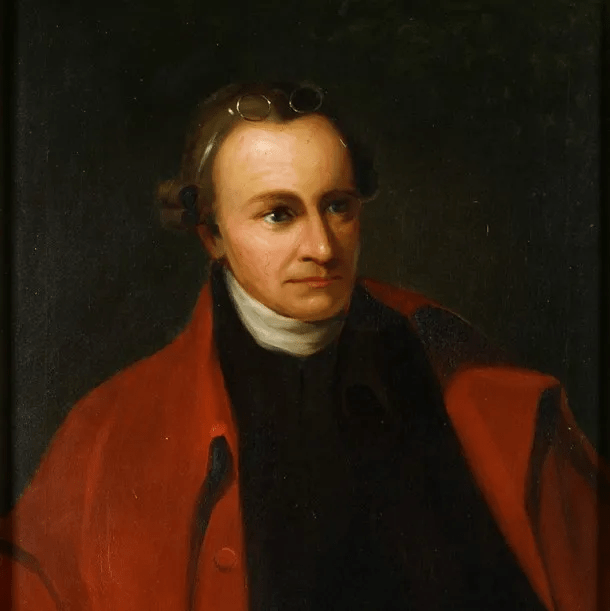
Patrick Henry is undoubtedly the greatest orator of our age.
In one of his earliest cases, he swayed a Hanover County jury to deliver a ruling that amounted to an intentional insult to the Anglican clergy — back pay of just a single farthing.
Just last year, he thundered those famous lines: “Give me liberty or give me death!” In truth, he may have actually said something else, but this is how the story is being told, so Henry gets the credit whether he said those precise words or not.

No one in Virginia has done more to rally Virginians and embolden them to stand against royal authority. As long ago as 1763, in his closing arguments in the so-called “Parson’s Cause” over how much the Colony owned its ministers, Henry intimated that King George III was a tyrant. In 1765, during the tumult over the Stamp Act, Henry came close to suggesting that the king be assassinated “Caesar had his Brutus; Charles the First his Cromwell; and George the Third . . . may profit from their example!”
When blows finally came, it was to Henry that Virginia turned to take up arms. He led the force that marched on Williamsburg when the royal governor, Lord Dunmore, seized the gunpowder from the town’s magazine and temporarily spirited it aboard a British vessel, allegedly for “safekeeping.”
More recently, Henry has led the recruiting and organizing of the Virginia militia as the Colonies have careened toward open rebellion against Great Britain. But is Henry truly a military man?
We may not get to find out.
Henry does have his detractors, who often think him too headstrong, too volatile even.
When Dunmore fled the capital of Williamsburg, and Virginia was left without a government, it was natural that the Committee of Safety put Henry in charge. However, that committee also kept a tight rein on Henry because some of the moderate members didn’t always trust his radical instincts.
When Dunmore set up operations in Hampton Roads late last year, the committee could have sent Henry to lead the Virginia military to roust him out. Instead, Henry’s rivals sent William Woodford of Caroline County. That choice can’t be disputed because Woodford’s force, augmented with some troops from North Carolina, won a great victory at Great Bridge that ultimately chased Dunmore out into the harbor.
The subsequent burning of Norfolk has left our great port city in ruins but given Virginians — indeed, all Colonists — a vivid demonstration of the dangers we face.
Over the course of the past month, someone — we don’t know who — has published a series of essays in The Virginia Gazette that make the case for why the time may have come for the Colonies to separate themselves from the king completely.
The anonymous author is signed simply “An American,” but the style and tone match up perfectly with that of Henry, so now we know where he stands, not that it was hard to guess.
Now the time has come to fight — if not for independence, then at least for something.
Henry, though, won’t be among them.
The Continental Congress wants to organize a truly national army. With that goal, the First Virginia Regiment that Henry organized has now been accepted into the Continental Line. However, its commander — Henry — was only offered the rank of colonel.
Insulted, Henry refused to accept what he considered a demotion and will stay home instead.
For some, this resignation — at a moment of crisis — shows exactly why Henry was not suited for the military. Too temperamental. It’s said that General George Washington, who knows Henry better than others, did not think him fit for a high command. Henry has never led troops into battle, not that many have, of course. Washington has made it clear that he will not follow the British custom of awarding officer positions based on social status but will instead award them only on merit.
That has left Henry sulking, although his critics whisper that the new Continental Army might be better off without him. Unfortunately, that’s not the view of many of the men he recruited — and say what you will about Henry, he was a masterful recruiter. Many wanted to quit the army if Henry could not, would not, lead them. To Henry’s credit, he has talked them out of that.
Still, this incident shows the difficulties that we Colonials face in organizing a resistance to the most powerful military on the planet. Aside from the lack of arms and the lack of trained men, we must contend with the pettiness of politics and personalities.
While we may never know whether Henry is overrated or underrated as a military commander, we know his political talents quite well. He had to sit out the Virginia convention that met in December due to his military service — the military must be subordinate to the civilian power — but another convention is set to meet in the spring, with elections in April. We expect Henry to offer himself for political service, and we’d expect him to win, so his powerful voice won’t be stilled for long.
A man of Henry’s talents should not be sidelined, but, as with a mechanical tool, must be used in the proper way to be useful.
GFK
 Observations From The Fifth Estate